
Did you know that people with chronic illness spend on average 2 hours a day tending to health-related activities? This includes taking medications, monitoring symptoms and even stoma bag changes. This is equal to an entire month each year, just to survive.
Life with a chronic illness is tough. I refer to mine as a ‘part-time job’: a job I never applied for or get paid for! Rude, right? And each and every one of us will have found ways to adapt. Here are my daily habits that make life that little bit easier:
Pacing/energy budgeting
Pacing is a strategy that balances exertion and rest, and it can help minimise flares and pain. I used to constantly be in a cycle of push and crash. Pushing my body beyond its capabilities and then facing long-lasting energy crashes. I still haven’t perfected it but by budgeting my energy better, life is more manageable.
I started by learning to admit what is too much for my body. It’s not always easy but some tasks simply are not manageable for me anymore, and this can change day-to-day! I start my day by checking in with my body, I see where my pain and energy levels are. This helps me work out what I can manage each day.
If I have plans coming up, I will keep the days before fairly free to prepare my body. And a few days following as designated ‘rest days’ to allow myself to recover.
Key tips for pacing:
- Prioritise tasks – identify which tasks are essential, and which are not
- Determine baselines – know how much you can do without triggering a flare
- Break up big tasks into smaller, more manageable ones.
- Take regular breaks
- Stop before you feel exhausted
Listening to my body
This feels the most important to me: accepting that some days will be lost. For me personally, some days are a write-off and that’s just how it is. Resisting a bad day can exhaust you twice over. I have learned to just give my body what it is asking for.
The 80% rule – I don’t always manage to do this but I try. I used to only rest when I gave myself no choice, out of pure exhaustion. However, one approach I try and use is the 80% rule. This means to stop when you feel around 80% of your energy has been used, rather then pushing to complete exhaustion.
By living with a chronic illness most of us are conditioned to ignore small niggles. However, most of us will have warning signs, mine look like:
- Headaches
- Brain fog
- Poor appetite
- My body feeling heavy
So it’s important when I feel any of these symptoms I allow my body rest, without guilt! It can feel frustrating and we are taught that pushing through is strength. However, it takes strength to stand up for yourself.
Support system
It’s important that you’re able to surround yourself with people who make allowances for your illness and support you. This includes people who don’t make you feel bad about cancelled plans, or even altered plans. My friends and family are all amazing, and are all willing to adapt to lower energy activities. For me this can include, not walking too far, being near a bathroom, taking frequent breaks and more. You shouldn’t be made to feel guilty for something you can not control.
I have had to distance myself from people who undermine me and my chronic illness. It’s not always fun, but it is essential in protecting my peace and my energy!
Rewarding yourself
As we all know, life with a chronic illness is exhausting. I allow myself a tiny joy every day, this is a non-negotiable for me, and it helps me get through the days. For me it can include:
- Reading a book
- Taking a nap without guilt
- Favourite snack or TV show
- Warm bath
- Cosy blanket
- Lighting a candle
- Colouring/journalling
This gives me something to look forward to, especially on the hardest days.
Mental health care
Individuals with chronic illnesses are more likely to develop mental health conditions like depression and anxiety. Since my diagnosis’, I have found keeping my mental health happy quite hard at times. I have had to learn ways to navigate these negative emotions and I want to share these with you.
‘Radical acceptance for chronic illness is the practice of completely accepting the reality of your health condition without judgement, denial or fighting against it.’
So radical acceptance isn’t approval of the situation but awareness that there is nothing that we can do to change it. For me, this looked like recognising what I can and can’t control, and focusing on the parts of my life that I do have control over because living with chronic illness is extremely unpredictable, and comes with uncertainty.
This method can help reduce the suffering that comes from fighting the reality of a situation. And most importantly, be kind to yourself.
Flare essentials
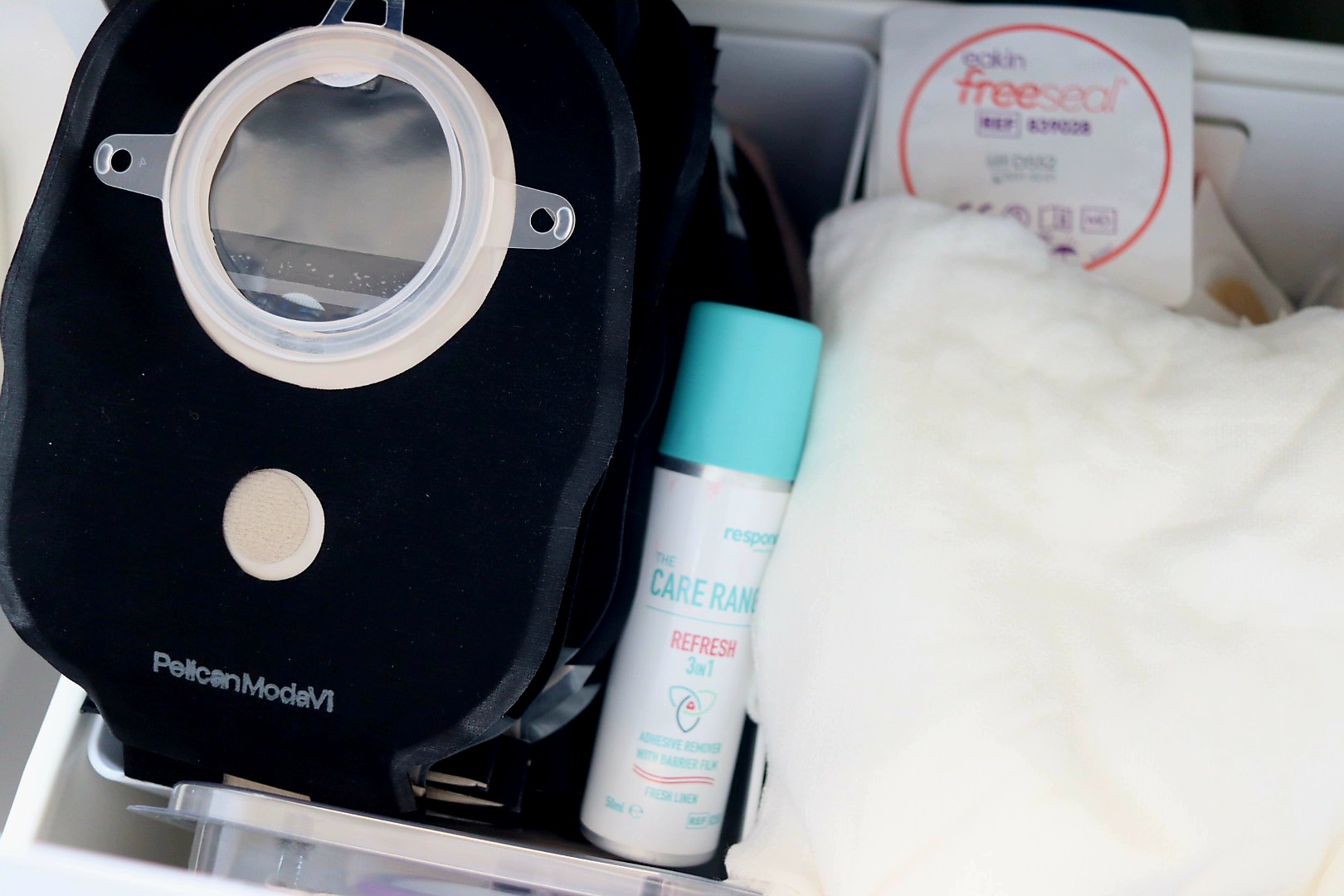
I have an organised ‘safe space’ for when I am in a flare, or just exhausted from life. This is my bedside table – I have all my frequently used items (stoma supplies, medication, heat pads, eye mask, injections) in here which are easy to access. Having all my flare essentials close to hand is really important because it means minimum physical effort, especially on those bad days and we all know, every tiny bit of energy counts…
Accepting support and adaptions
As someone who lives with multiple chronic illnesses and a stoma, adaptations are made to help me get through life. This includes support and help from my partner. This isn’t a sign of weakness but are tools which keep me living a life that works for me. I now do things differently to what I used to, which can be hard to accept. It can be hard to accept help from others, especially if you are used to being fully independent.
When energy is limited, we can make adaptations to save our energy for the things that matter most. Some adaptations may include buying pre-cut veg, using mobility aids, frequent breaks or taking pain medication to get through the day. Allowing adaptations and support in your life is nothing to be ashamed of.
Some days are about surviving not thriving, and that’s ok. Sending all you spoonies some strength.